
Ancient Egypt was far from a monotonous period of history, with numerous periods of political and social strife occurring in the course of over 1,000 years. One of the most notable of these is the First Intermediate Period, a 125-year “Dark Age” of the 22nd and 21st centuries BCE in which few monuments were built and many were pillaged or destroyed. The country was split into Upper and Lower Egypt, with the pharaohs of each holding little power compared to the local rulers, known as nomarchs.
One of the most powerful and prosperous nomarchs of the time was Ankhtifi, based in Nekhen. His tomb at the El Mo’alla Necropolis south of Luxor provides a rare glimpse of the period’s life, art style, and practices.
Ankhtifi’s tomb autobiography boasts of how he brought economic stability and security to his region at a time when much of Egypt was in a prolonged famine. Although ruling largely independently of the pharaohs, he supported those of Lower Egypt in their attempts to conquer Upper Egypt.
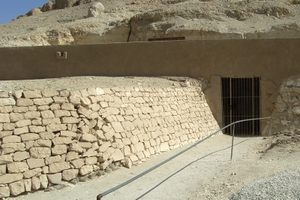
A unique glimpse into an understudied period of Ancient Egypt, Ankhtifi’s tomb has been preserved and opened to the public alongside those of his family and other nomarchs at El Mo’alla.